In mid ‘83 I heard a song on the radio that immediately roused my senses to fever pitch. It was like a call to arms for the mind, body and spirit. The song was ‘The Walls Came
Down’ by the Call. For all intents and purposes I was of the view
(misapprehended as it was) that the Call were British - in fact I would
have guessed
Scottish to be more precise. They just had that rousing ‘highlands’
passion to their sound (think Big Country or Simple Minds). But as it
happened, and as I discovered years later, the Call were in fact a
quartet from Santa Cruz, California, formed in 1980.
The Call heard the call to instruments in 1980, comprising the quartet of Michael Been (vocals, guitar, and chief songwriter), Greg Freeman (bass), Scott Musick (drums), and Tom Ferrier (guitar). By 1982, the Call had scored a recording contract with the Mercury label and released their eponymous debut album - recorded in England. The album failed to make an impact on the charts, but earned positive reviews and came to the notice of Peter Gabriel (he of the Sledgehammer), who invited the band to open for him on his 1982 ‘Shock The Monkey’ tour (Gabriel was quite enamoured with the Call’s sound, referring to them as the ‘future of American music’).
1983 would witness a call to commercial breakthrough for the Call with the release of their sophomore album ‘Modern Romans’ (US#84/OZ#50). The album was overtly political, or at least the songs within were in a lyrical sense. None more so than the single ‘The Walls Came Down’ which was as ‘call to arms’ and ‘anthemic’ as they come. Written by vocalist and guitarist Michael Been, the lyrics to ‘The Walls Came Down’ had been inspired by contemporary world events, as had many tracks on the ‘Modern Romans’ album. ‘The Walls Came Down’ didn’t play on people’s fears (as the lyrics commented) but did play on their passion for rousing rock music. Well they blew the horns and the song peaked at #74 on the U.S. Hot 100, but really found an audience here in Australia (OZ#21). I recall seeing the black and white video on Countdown (black and white videos were all the rage circa 1983), and I remember wondering who the rather mature looking bearded gentleman on the keyboards was. It was pointed out at the end of the video that it was none other than Garth Hudson, ex of the legendary Band. Hudson contributed keyboards to the Call’s first three albums.
The Call had certainly come to the notice of critics and showed considerable commercial promise, but their third album didn’t produce according to the script. 1984’s ‘Scene Beyond Dreams’ (US#204) hit a different chord both lyrically and stylistically, with some of the rouse removed from rousing. By this time bassist Greg Freeman had been replaced by keyboardist Jim Goodwin. The album on the whole was a little too introspective and failed to find an audience beyond the Call’s core fan base.
The momentum initiated by ‘Modern Romans’ had been lost, and so too was the Call’s association with the Mercury label. But Elektra Records still saw promise in the literate and fervent rock proffered by the Call and subsequently threw them a recording lifeline. By 1986, the Call had emerged from the studio with their fourth album, titled ‘Reconciled’ (US#82), which revisited some of the Call’s earlier ardent stride to arms approach. In mainstream terms it proved to be the band’s most commercially successful album to date, and it wowed the Call’s growing fan base on the college rock circuit. The singles, the atmospheric and defiant ‘I Still Believe’ (US#17 - mainstream rock) and pulsating rocker ‘Everywhere I Go’ (US#38 - mainstream rock) both received airplay and commercial returns. The ‘Reconciled’ album featured a star studded line-up of guest players - Peter Gabriel, Jim Kerr (Simple Minds), and the Band’s Garth Hudson and Robbie Robertson - not bad credentials in that lot.
Once more the Call scaled back some of the rallying call motif for their 1987 album ‘Into The Woods’ (US#123), released on the Elektra label, and featuring the single ‘I Don’t Wanna’ (US#38 - mainstream rock), a lyrical declaration of intent. The track ‘In The River’ was also well received on US college radio. But something big was just over the horizon.
As if oscillating between stylistic extremes, the Call re-engaged with their buoyant, ardent pitch for their 1989 album ‘Let The Day Begin’ (US#64), released on the MCA label. The lead out single was ‘You Run’, an
appealing pop-rock number, which peaked at #29 on the US mainstream rock chart (UK#78), and delivered a taste of what was about to come. The album’s title track, ‘Let The Day Begin’, worked brilliantly as an anthem for the masses, everyone from the truck drivers to the school teachers to the ‘soldiers of the bitter war’. The lyrics were matched with a strident and infectious guitar hook throughout. ‘Let The Day Begin’ hit #1 on the U.S. mainstream rock chart (#51 Hot 100/ UK#42/OZ#74).
1990 saw the Call once more invert their sound to embrace a more roots oriented feel, not a million miles from the down home feel of the Band (logical that they would visit this style given Band-mates Hudson and Robertson had guest roles on earlier Call albums). The single ‘What’s Happened To You’ (#39 US mainstream rock) was in its own laid back style a call for self reflection. Taken from the ‘Red Moon’ album, the track featured backing vocals by none other than U2’s Bono.
In 1994, the Call’s front man Michael Been released a solo album, ‘On The Verge Of A Nervous Breakthrough’, and by 1997 the Call reconvened operations for the ‘Heaven & Back’ album. That would prove to be the Call’s final studio album, but 2000 saw the release of the ‘Live Under The Red Moon’ set (does the title remind of another more well known live set?). Following a lengthy stint on the road, the Call disbanded shortly after the album’s release.
Michael Been continued to work in the music business but as a soundman for his son Robert’s band, Black Rebel Motorcycle Club. Sadly, he suffered a fatal heart attack backstage in 2010. Three years later, Jim Goodwin, Scott Musick, and Tom Ferrier reunited for a series of live shows, with Been’s son Robert handling vocal and bass duties.
Despite a great deal of promise and praise both from critics and peers, the Call didn’t manage to break free of a narrow bandwidth of popularity, mostly with college and indie rock circles. A shame really, given their lyrical integrity and profundity of sound styles.
For those of you wanting to immerse yourself more in the world of the Call, there is an official website of the band of considerable quality which can be found here -
http://the-call-band.com/default.html
Thursday, January 23, 2014
Sunday, January 12, 2014
Hall & Oates - Blue Eyed Soul Of The Private Eyes Variety
While the dust was still settling on ‘Voices’, Hall and Oates were making serious progress on their tenth studio album. After a marathon 101 recording sessions, ‘Private Eyes’ hit the record stores during September of ‘81, and based in part on the widespread anticipation, immediately made an impact on the charts. The album had almost been christened ‘Head Above Water’, but the aquatic reference would be saved for the next album’s title. Once more Hall and Oates were controlling the production side of things, removing one layer in the communication process, and giving them a sense of immediacy in the recording process. Daryl Hall worked
closely once more with Oates and the Allen sisters in the writing process. The duo’s touring band were once more on hand, featuring guitarist G.E. Smith, drummer Mickey Curry, saxophonist & keyboardist Charlie DeChant, and bassist Tom T-Bone Wolk, all of who leant a more kinetic energy to the music. Due to the overwhelming success of ‘Voices’, the duo knew they had arrived at a good place in the recording process, and were confident in exploring new fields on the sonic-scape, and honing things to a finer grade on ‘Private Eyes’. But they were careful to retain the pristine pop/soul framework that had been the cornerstone of their recent success.
The first single from ‘Private Eyes’ was the title track. The song opens with a burst of electric guitar and
surges towards a hook filled chorus, driven in part by percussive hand claps. The accompanying music video to ‘Private Eyes’ is a personal favourite, and featured Hall & Oates with backing band in full hard boiled detective garb, complete with trilby hats and trench coats. There was nothing covert or inconspicuous about the rise of ‘Private Eyes’ up the
charts. It debuted during September of ‘81 and by the beginning of November had surged to #1 (OZ#17/UK#32), knocking Christopher Cross off the perch in the process. Two weeks later Hall & Oates relinquished top spot to a physical Olivia Newton-John, but it wouldn’t be long before they’d return to lofty heights once more.
During Olivia Newton-John’s marathon 10 week stint atop the U.S. Hot 100 with ‘Physical’, the single ‘Private Eyes’ descended slowly down the charts, whilst its follow up ascended toward the toppermost of the poppermost. Penned by the duo and Sara Allen, ‘I Can’t Go For That (No Can Do)’ was a pared back affair, sultry and seductive with a hypnotic drum machine percussion track guiding Hall’s restrained vocals. The songs’ title emanated from a much used phrase used by the duo and associates when they didn’t want to go along with the prevailing tide of thought. It was almost an after thought in the recording of the album, with Hall messing about with a synthesizer riff that expanded on a chorus left over from the ‘Voices’ sessions.
The soulful, playful track debuted on the U.S. Hot 100 at #59 during November of ‘81, and 11 weeks later took up residence at #1, the duos fourth chart topper (in turn replaced at #1 by J. Geils Band with ‘Centerfold’ - see future posts). ‘I Can’t Go For That (No Can Do)’ (OZ#13/UK#8) also proved to be a huge crossover hit, topping adult contemporary, R&B, and dance charts - this was something the duo were particularly proud of, bridging the gap between musical styles, and reducing some of the barriers between ‘black soul’ music and ‘mainstream’ pop/rock.
‘Did It In A Minute’ was the third single, and managed to deliver its vibrant pop/rock payload in just under four minutes, a bit like a mile. The song is a personal favourite of this author, and reveals a
‘82, and in double quick time peaked at #9 by mid year. The singles action associated with the album was rounded out in mid ‘82 with the release of single #4, ‘Your Imagination’ (US#33), a dip of the hat to some of the more minimalist new wave fare on offer at the time (think the Police, Cure etc). Other album highlights included the stellar Temptations tribute ‘Looking For A Good Sign’, and the frenetic ‘Head Above Water’ (originally intended as the album’s title track).
But the ‘Private Eyes’ (US#5/UK#8 /OZ#19 - certified platinum) album was more complete in nature than a receptacle for hit singles. It was arguably Hall & Oates’ most complete album to date, and the pinnacle of their pop career, not that the duo was walking away from chart success any time soon. In fact whilst ‘Private Eyes’ was still focussed high on the charts, Hall & Oates were already
laying the framework to yet another sterling LP.
During the second half of ‘82, Daryl Hall and John Oates returned to the studio with backing band in tow, and co-producer Neil Kernon in the control booth (along with a film crew from MTV, documenting the recording). ‘Voices’ and ‘Private Eyes’ would prove tough acts to follow, but the duo were about to craft a new album that would complete a trilogy of tremendousness and confirm (as if any one doubted) their place as one of the pre-eminent pop artists of their time.
The cleverly titled ‘H2O’ (Hall/duo/Oates) hit stores during November of ‘82, accompanied by the single ‘Maneater’. The song
has a seductive groove that lures the listener from its opening bars. The song had begun life as a chorus John Oates had written, which was accompanied by a reggae style beat. Daryl Hall then came on board to modify the beat track to a more seductive urban groove, and came up with some versus to match the quality of the chorus. ‘Maneater’ (OZ#4/UK#6) entered the U.S. Hot 100 at #65 during October of ‘82. Nine weeks later it had devoured the opposition to hold sway at #1 on the menu….err…charts. It knocked off Toni Basil’s ‘Mickey’ (see previous post), and spent a total of 4 weeks at the chart summit (the duo’s longest chart topping run), before being replaced with a ‘Down Under’ desert from Men At Work. The accompanying music video caused a minor stir, in particular from feminist groups unhappy with a woman being depicted with a jaguar’s face - I mean what else can you do to illustrate a ‘maneater’.
The seductive ‘One On One’, penned by Daryl Hall, cruised its way up to #7 in early ‘83 (OZ#77 /UK#63). ‘Family Man’, ‘One On One’s stylistic antithesis rounded out the trio of single releases from ‘H2O’ (US#6/OZ#49 /UK#15). The trio of top tens helped float the album to #3 in the U.S. (OZ#3/UK#24). Hall and Oates attempted to stretch the stylistic boundaries on ‘H2O’, straying from the more comfortable soul/pop neighbourhood, and venturing into less familiar territory, such as the cover of Mike Oldfield’s paranoid art rocker ‘Family Man’, the synth-pop infused ‘Crime Pays’, and the power pop punch of ‘Delayed Reaction’. In all the disparity of styles results in a marginally less cohesive album. Despite the same touring band backing, some of the tracks came across as too well ‘controlled’ from the production booth, lessening the
immediacy of the album as a whole, with some of the tracks getting lost in the precise production wash. Oates was quoted in Rockbill at the time as saying the album was ‘very streamlined’, which arguably contributed to a sense of ‘over production’. Regardless, ‘H2O’ is an album of exemplary quality, and went on to become the highest charting, and biggest selling Hall & Oates set.
1983 witnessed something remarkable, something that hadn’t occurred for more than a decade. Actually, it was something that wasn’t witnessed. For the first time since they released their debut album in 1972, Daryl Hall and John Oates didn’t release a full album of all original songs. Maybe after the terrific trio of ‘Voices’, ‘Private Eyes’, and ‘H2O’ the duo needed time to catch their breath. But fans needn’t have concerned themselves too much, as RCA released a compilation album, aptly titled ‘Rock ‘n Soul, Part 1’ (US#7 /OZ#12 /UK#16), the track listing of which contained all the expected
suspects, but with the bonus inclusion of two newly recorded original tracks. And these weren’t album fillers, as both would be released on the charts and storm toward the pinnacle of the charts.
‘Say It Isn’t So’ was released in October of ‘83 and immediately was added to MTV and radio play lists.
The song offered the same seductive percussion line, overlaid by pristine instrumental tracks, and smoothly blended vocal harmonies. The accompanying music video placed more than usual emphasis on the duo’s backing group, an acknowledgment to their vital role in evolving the Hall & Oates brand of pop/soul. That ‘brand’ landed Hall & Oates with yet another top ten hit (US#2/OZ#24/UK#69), and one that went dangerously close to yielding the duo another #1 (stopped in its tracks at #2 by yet another vocal expression in the form of ‘Say, Say, Say’ by Michael Jackson & Paul McCartney). The second original track from the compilation was ‘Adult Education’, released as a single in early ‘84. Heavy on the percussion and urban grooves, the single most likely appealed more to a sophisticated adult audience than the MTV generation. Nevertheless, ‘Adult Education’ climbed to a top ten place (US#8/OZ#94/UK#63), continuing Hall & Oates’ stunning run on the U.S. charts.
Around this time, Daryl Hall took time out from duo duties to record with Elvis Costello on the classic ‘The
Only Flame In Town’. During April of ‘84, it was also announced by the Recording Industry Association of America, that Hall & Oates were officially the most successful duo in the modern rock era, overtaking the likes of the Everly Brothers in commercial and chart terms, and bigger than the likes of Simon & Garfunkel and the Righteous Brothers combined.
But rather than rest on their laurels, it wasn’t long before the dynamic pop/soul duo reunited in studio to lay the groundwork for their 12th studio set. They had parted ways with long time producer Neil Kernon, opting to collaborate in the control booth with Bob Clearmountain (went on to produce Bryan Adams, Bruce Springsteen and INXS among others), with production taking place once more in New York’s Electric Lady Studios. Having perhaps exhausted the winning formula that dominated the triumphant trio of early 80s albums, Hall and Oates decided to make
some stylistic changes for their next album. By the time recording commenced, the duo had just nine songs in mind to include on the album, and one of those was little more than an intro track to side 1.
The lead out single was the big sounding ‘Out Of Touch’, a track bursting at the seams with bombastic percussion lines, overpowering synthesizer tracks, and layered vocal harmonies throughout. It could be argued the track lacks a rawness because a strong production hand is so in evidence throughout, but for mine it delivers a powerful punch right on the chin of the listener, who could be but stunned in admiration of the track. ‘Out Of Touch’ originated as a chorus by John Oates. Daryl Hall took the song in studio and enhanced the ‘urban groove’ feel the duo were going for. Hip-hop, rap producer Arthur Baker came on board to oversee the final mix, and Hall & Oates had the fresh new sound they’d been looking for. ‘Out Of Touch’ first touched the U.S. Hot 100 at #48 during September of ‘84, and ten weeks later
replaced Wham! at the top of the charts (for 2 weeks), delivering Hall & Oates their sixth (and final) U.S. chart topper (OZ#11 /UK#48). Incidentally, the first rate music video features arguably the world’s biggest kick drum.
The follow up single was the funky and quirky ‘Method Of Modern Love’, with the ‘method’ spelled out as ‘M.E.T.H.O.D.’ in the chorus. The funky track brought more S.U.C.C.E.S.S. on the charts for Hall & Oates in early ‘85 (US#5 /OZ#56 /UK#21). For an album of just eight full length songs, four singles seemed to be pushing their luck, but the slow rocker ‘Some Things Are Better Left Unsaid’ (US#18), and the John Oates voiced ‘Possession Obsession’ (US#30) rounded out associated ‘Big Bam Boom’ activity by mid ‘85. Though a notch or two down on the performances of its predecessors in critical terms, ‘Big Bam Boom’ accomplished more than respectable sales figures (US#5 - their fourth consecutive top 10 album /OZ#20/UK#28), proving that Hall & Oates hadn’t lost their way, rather taken a short detour or two from the oft chosen path.
Whilst the marketers and video production crews did their thing to promote ‘Big Bam Boom’, Daryl Hall and John Oates took time out from studio work to catch their breath, and re-examine some of their
soul/R&B roots. It led the duo to perform at the re-opening of New York’s Apollo Theatre, on stage with child hood idols, David Ruffin and Eddie Kendrick, ex of the Temptations. The concert was recorded and led to the release of the live album, ‘Live At The Apollo’ in October of ‘85 (US#21/OZ#39/UK#32). The opening medley, titled ‘Apollo Medley’ was released as a single (US#20/OZ#81/UK#58) and credited to Daryl Hall and John Oates with David Ruffin & Eddie Kendrick. The balance of tracks on the live album were a selection of Hall & Oates hits, including ‘I Can’t Go For That (No Can Do)’ and ‘One On One’ along with a stirring rendition of the Sam & Dave hit ‘When Something Is Wrong With My Baby’. The experience led to the participants joining forces once more to perform at the Philadelphia concert of Live Aid in July of ‘85 (Hall & Oates had also appeared on the U.S.A. For Africa charity song ‘We Are The World’), and
for a brief period touring more broadly. The experience added further to the duo’s credibility as purist soul/R&B exponents, as if they needed any more credentials.
By the end of their ‘85 ‘soul’ tour, Daryl Hall and John Oates decided to take a proper sabbatical from duo duties, for what would turn out to be a period of three years. Whilst Oates continued to write and tinker in the studio, the irrepressible Daryl Hall remained the much more active in studio. The sessions resulted in Hall’s second solo album, ‘Three Hearts In The Happy Ending Machine’ (US#29/OZ#42/UK#26), released in August of ‘86. The lead out single was the deliciously playful new wave psychedelic number ‘Dreamtime’, resplendent with cascading guitars, swirling keyboards and echoing drum machines. ‘Dreamtime’ kicked off the album in style, and promised much for the sonic
journey ahead, even if that journey doesn’t quite deliver on the promise shown at the beginning. ‘Dreamtime’ scored Daryl Hall yet another top five hit in the U.S. (#5/OZ#28 /UK#28), and was backed by one of the most visually enticing music videos of the era. The rather bland ‘Foolish Pride’ crept into the US top 40 (#33), but there were one or two other highlights on the set, including the strong melody of ‘I Wasn’t Born Yesterday’(penned with Dave Stewart), and the surging chorus hook of ‘For You’.
Though Hall’s ‘Three Hearts’ set had been released on RCA, the duo of Hall & Oates had parted ways with the label (signing with Arista) by the time they reconvened in studio to begin work on what would be viewed as a ‘comeback’ album. Though their chart dominating days were behind them, there was no reason to think in 1988 that Hall & Oates couldn’t
still make a noise chart side. The much anticipated lead out single was ‘Everything Your Heart Desires’, a mellow but soulful track which climbed to a more than respectable #3 on the U.S. Hot 100 (OZ#75). Its follow up was ‘Missed Opportunity’ (US#29), a smooth and sleek ballad co-written by Hall, Oates and long time song writing partner Sara Allen. ‘Downtown Life’ (US#31) was the funky little rocker and the opening track on the source album, ‘Ooh Yeah!’ (US#24/OZ#46/UK#52), promotion of which took place in the form of the duo touring for the first time in nearly three years.
So accustomed to expecting an album a year output from Hall & Oates, long time fans must have taken some adjusting to 2-3 year periods elapsing between studio albums. And so it was that two years had passed by before 1990’s ‘Change Of Season’ was released. The opening track, and lead out single, was the guitar rock ballad ‘So Close’, co-written by co-producer Jon Bon Jovi (who’d have thought?), which
managed a very acceptable #11 Stateside (UK#69), but the follow up ‘Everywhere I Look’, though a pleasant enough soul track, almost disappeared before it had been released (UK#74), making it the first single cut from a Hall & Oates album to miss the Hot 100 in over 15 years. The source album also sold poorly Stateside (US#61), though oddly attracted more interest in Britain (UK#44), something of an anomaly to that time. It appeared that the duo who had been so ubiquitous on music charts from the late 70s to mid 80s, were, like so many of their kin, unable to make the jump to commercial entities in the 90s.
Once more, Daryl Hall and John Oates decided to pursue solo interests, though numerous and sundry Hall & Oates compilations satisfied long time fans, and introduced the younger generation to one of popular music’s most revered duos of all time.
Over the next few years Daryl Hall found a new audience for his solo work, namely Britain. His 1993 solo
album ‘Soul Alone’ (rather apt title - UK#57) was released on the Epic label and acted as much as a cathartic experience for Hall as a commercial pursuit. A longing for Philly soul was evident on a number of tracks, homages to the idols of his youth. ‘I’m In A Philly Mood’ (UK#59) was the most obvious of these and found Daryl Hall in typically good vocal form. A cover of Marvin Gaye’s ‘Stop Loving Me, Stop Loving You’ (UK#30) reminds me of the sound of UK soul/pop act Level 42. ‘Help Me Find A Way To Your Heart’ (UK#70) was another easy listening track with a sprinkling of soul pedigree. Hall continued to have some commercial success on the U.K. charts, in 1994 with ‘Glory Land’ (UK#36), the official theme song for U.S.A. 1994 World Cup, and credited to Daryl Hall and Sounds Of Blackness. In 1995, Hall recorded a duet with soul singing legend Dusty Springfield, titled ‘Wherever Would I Be’ (UK#44). Hall has subsequently released two solo albums; ‘Can’t Stop Dreaming’ (1997), and ‘Laughing Down Crying’ (2011).
By 1997, Hall & Oates had joined forces once more to record an album of new material. Released on the
Push Records label, ‘Marigold Sky’ reflected a duo acknowledging that they can no longer push the contemporary envelope, and instead returning to the musical palette they know best, recording an agreeable collection of soul-pop songs. Subsequent years have seen a steady balance between album releases and touring (including playing with the likes of Icehouse - see previous post - in Australia, and my sister said they still put on a great show), with albums ranging from ‘Do It For Love’ (2003), through ‘Live At The Mirage’ (2008), to ‘Angelina & Other Favourites’ (2012).
When looking back in retrospect at the career of Daryl Hall and John Oates, it’s nigh on impossible to overstate just how hugely successful they were in both commercial and critical terms. Hall & Oates ranks as the next to biggest selling
act ever on the RCA label, second only to Elvis Presley. As mentioned earlier, they rank as the #1 pop/rock duo of all time, surpassing the careers of the Everly Brothers, the Righteous Brothers, and Simon & Garfunkel. By sheer weight of chart numbers, Daryl Hall and John Oates have few peers with six US#1 singles, a further nine certified top ten entries, and 17 Hot 100 hits, not to mention four consecutive top five albums. When they were big, Hall & Oates were really, really big, and carved a place of distinction in the epoch of popular music. Not bad for a couple of Philly kids pursuing their passion for soul music.
Labels:
Daryl Hall,
Hall and Oates
Hall & Oates - The Dynamic Duo of Blue Eyed Soul
During the first half of that decade commonly referred to as ‘the 80s’, if you spent any amount of time surfing the FM bandwidth you will have encountered the musical musings of one Daryl Hall and John Oates, referred to in unison as Hall & Oates. The aforementioned duo established an almost ubiquitous presence on both commercial radio and music charts during the first half of the decade, and in so doing carved out a place in the pantheon of popular music history.
I’ve always had an interest in how bands/duos came into being, what chain of events or happenstance led to two or more individuals combining their talents to make the whole greater than the sum of its parts. Both Daryl Hall and John Oates were raised in Philadelphia, New York born Oates having moved there as a small child. Both studied music from an early age and by their teens were involved with local doo-wop vocal groups. In 1967, Daryl Hall provided vocals for a single recorded by local group Kenny
Gamble and the Romeos, but his primary gig was with his vocal group the Temptones. Hall’s Temptones entered a local battle of the bands contest held at Philadelphia’s Adelphia Ballroom. John Oates was also entered in the contest with his group the Masters. At one point in the evening’s proceedings one of the contestants doo-wop disagreed with anothers shoo-wop, and a melee broke out backstage. To escape the fracas, Hall and Oates ducked into a nearby freight elevator and therein became acquaintances, soon to be friends, and thereafter career partners. But some water had yet to pass under the bridge before the duo would collaborate fulltime.
While Oates focussed on completing a journalism degree at Temple University, Hall moved away from his formal music studies and continued to work as a backing vocalist for various artists, working for labels such as Arctic, Neptune and Philadelphia International out of Sigma Sound Studios, the ‘Philly sound factory’. During the late 60s/early 70s Hall quickly honed his craft in studio with top soul/R&B artists such as Smokey Robinson, the Delfonics,
the Stylistics, and the Temptations. In 1970, Daryl Hall teamed with songwriter Tim Moore, and producer Tom Sellers to record an eponymous album under the name ‘Gulliver’. The album failed to attract much attention but it gave the young vocalist valuable in studio experience. During the ‘Gulliver years’, guitarist John Oates took time out from his own band the Masters, and would occasionally sit in on sessions and at live gigs, and by the time Gulliver’s travels were over in 1972, Daryl Hall and John Oates agreed to try their luck as a duo. After all, it had worked a treat for Simon and Garfunkel so why not.
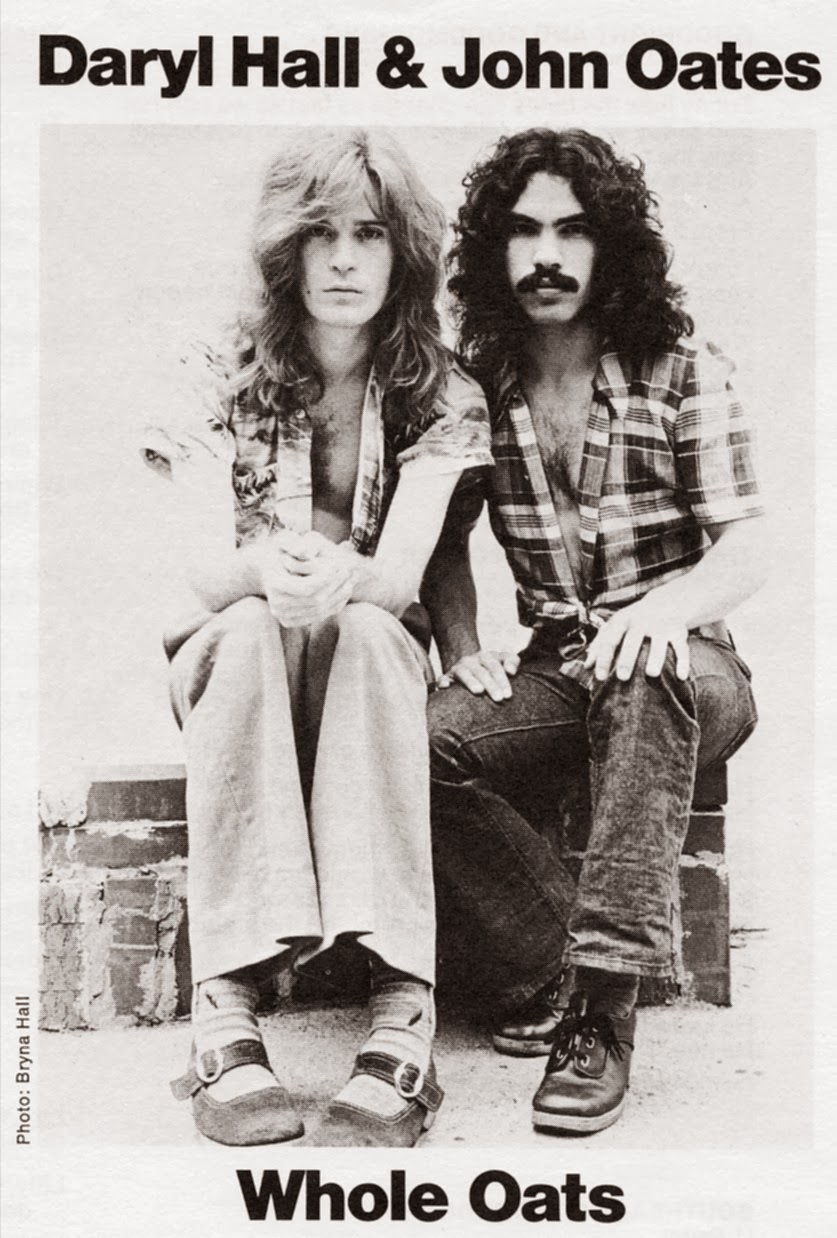
With favourable word of mouth working in their favour, Hall and Oates landed a recording contract with Atlantic Records, and with acclaimed producer Arif Mardin calling the shots in studio, the duo’s debut album ‘Whole Oates’ was released in November 1972. Recorded in New York City, neither album nor associated singles troubled the charts, but it provided the palette over which to layer the duo’s burgeoning R&B/pop/soul fusion, and was yet another important step toward pop’s pinnacle. 1973
saw the release of the more urban soul/pop flavoured dish…album ‘Abandoned Luncheonette’, featuring the single ‘She’s Gone’, written about both Hall’s divorce and a New Year’s Eve date that stood John up. The single on first float surfaced at #60 on the US Hot 100 in early ‘74 , but would return for a more successful outing a couple of years later. Incidentally, R&B vocal act the Tavares covered the song and scored a major R&B hit just a few months later. The duos Atlantic label experience was rounded out by the 1974 album, ‘War Babies’, produced by studio guru Todd Rundgren. The album was an edgier more experimental rock endeavour, and fell well short of impressing enough listeners to make the charts, though did sell well in the New York area having been pushed favourably by local radio stations.. Soon thereafter, the duo parted ways with the Atlantic label.
Though having recorded three relatively modest selling albums, Hall and Oates had impressed enough people
in the know to land a new recording contract with the RCA label, in 1975. The duo set to work soon after on recording a self titled set, which would prove to have the breakthrough formula. The ‘Daryl Hall & John Oates’ (US#17/UK#56) set was released in September of ‘75 (again produced by Todd Rundgren, and featuring an eye catching cover), and featured the lead out single ‘Camelia’, the album’s opening track and an engaging welcoming to the listener. The single flopped and initial sales for the album were sluggish, but the album’s second single would change all that. The delicate, soulful ‘Sara Smile’ had been co-written by Daryl Hall and his then girlfriend Sara Allen. It soon had everyone associated with it beaming as it ascended to #4 on the U.S. charts in mid ‘76, gaining gold certification in the process. On the back of ‘Sara Smiles’ success, the duo’s former label Atlantic re-launched ‘She’s Gone’ as a single and delivered Hall & Oates with a second (unexpected) top ten hit within three months (US#7/OZ#52/UK#42).
Hall and Oates re-entered the studio during the first half of ‘76 to record the all important follow up to their
commercial breakthrough. The resultant album, ‘Bigger Than Both Of Us’ (produced by Chris Bond) hit the shelves in September ‘76, and was to prove bigger in more than just title. The first single was the languidly smouldering ‘Do What You Want, Be What You Are’, which dipped its toes into the US top 40 (#39) late in the year. But it was to be the follow up single that would elevate the names of Hall and Oates to the spotlight on charts across the world. ‘Rich Girl’ debuted on the U.S. Hot 100 during January of ‘77, and took just nine weeks to reach the top of the charts during March of that same year (replacing Barbra Streisand), earning the duo their first chart topper (2 weeks at #1 in total/OZ#6). Written by Daryl Hall, the hook laden ‘Rich Girl’ packed a powerful pop/soul punch into its run time of just under 2 ½ minutes, in the process making Hall & Oates a lot richer. On the back of ‘Rich Girl’, and the follow up single, the gritty, soul infused
‘Back Together Again’ (US#28/OZ#65), the album ‘Bigger Than Both Of Us’ scored a platinum accreditation (US#13/OZ#23 /UK#25). The album’s slicker, more pop oriented sheen added an appealing layer to the duo’s solid R&B/soul base. ‘Bigger Than Both Of Us’ also featured, in my humble opinion, the most beguiling of the duo’s album cover art.
The duo’s next album appeared in chart traffic during October of ‘77. ‘Beauty On A Backstreet’ (US#30/OZ#60 /UK#40) presented the Hall & Oates model with a slightly grittier, rock edged finish. The album didn’t yield any hit singles but did possess in its grooves one or two minor gems. ‘Bigger Than Both Of Us’ was a lushly layered, soul styled song which should have been a hit single (and ideally should have been included on the duo’s last album of the same name). The doo-wop shaded
‘Why Do Lovers Break Each Other’s Hearts’, was co-written by Hall, Sara Allen, Tony Powers, Phil Spector, and Ellie Greenwich - not a bad collective pedigree in that collaboration.
Having toured tirelessly in recent years, Hall & Oats finally released a live set ‘Livetime’ (US#42/OZ#76) in mid’78 to little fanfare. Despite having toured with a team of highly regarding session players as their backing band, reviews indicated that there were some limitations in recreating the polished studio sound in a live setting.
A few months later, Hall & Oates re-emerged from studio seclusion with their seventh studio album in as many years. ‘Along The Red Edge’ (US#27/OZ#69) continued the duo’s rock edged approach, but with finely crafted, soul infused melodies promoted to more front and centre. The lead out single, ‘It’s A Laugh’ (US#20) could have fitted comfortably in the E.L.O. songbook, with it’s melodic,
layered harmonies enticing the listener from the album’s opening track. The follow up single, ‘I Don’t Wanna Lose You’ (US#42), was an effervescent, soul styled number, reminding listeners of Hall & Oates’ firm allegiance with the rich Philly soul sound.
The next album, ‘X-Static’ (US#33/OZ#74), found Hall & Oats caught in the same disco vortex as just about every other act during 1979. Despite experimenting with disco rhythms, the album (released late in ‘79) did retain some soul/ pop/rock integrity, as evidenced on the mid tempo first single ‘Wait For Me’ (US#18/OZ#81). The follow up single, ‘Running From Paradise’ (UK#41), ventured into new wave synth-pop punctuated by strident fills of electric guitar, perhaps explaining Hall & Oates’ rare foray (to that time) into British chart territory. Another track highlight was the blend of genres contained within the five minutes of ‘Portable Radio’, somewhat of an experimental effort.
As the 70s drew to a close, Hall & Oates had experienced a mild dip in commercial fortunes, but all the while the duo were refining their stylistic formula. And soon that evolution would pay huge dividends.
During the first half of 1980, Daryl Hall and John Oates parted ways, albeit briefly, to focus on solo
projects. Hall released the solo album ‘Sacred Songs’, produced by Robert Fripp (King Crimson), recorded earlier but held back from release by RCA. Stylistically, the album was a prelude to the duo’s next studio album. Meanwhile, John Oates wrote the soundtrack to the film ‘Outlaw Blues’.
By mid 1980, Hall & Oates were back together in the studio (to be precise, Studio C at New York’s Electric Lady Studios), this time acting as producers and artists, working on the first of what would be a trilogy of albums that would redefine their career, and one that would create a relentless momentum toward the top of the pop charts. The lead out single, ‘How Does It Feel To Be Back’ (US#30/OZ#48), was also the album’s opening track, and hit the charts in August of ‘80. The power-pop styled track was penned by John Oates, and if there were an answer to the title’s question,, the answer would soon prove to be very good indeed.
The follow up singled was a cover of the Righteous Brothers classic, ‘You’ve Lost That Lovin’ Feeling’. With lead vocals from John Oates, the track parked itself just outside the U.S. top ten late in 1980 (UK#12/UK#55 - I’m not certain if the single was released in Australia, but it didn’t chart here).
Aside from self producing this album, Hall & Oates opted to replace session players with recording with their own road band, a move that immediately improved on the overall synergy and energy in studio. The

cohesiveness that had been honed on the road was now flowing through the recording process. It was the third single lifted from the ‘Voices’ album which would best illustrate the duos arrival at a winning formula. ‘Kiss On My List’ debuted on the US Hot 100 at #69 during February of ‘81, and eleven weeks later this perfect slice of pop/rock heaven puckered up and planted one at the top of the charts (OZ#13/UK#33). The song had replaced Blondie’s ‘Rapture’ at #1, spent 3 weeks at the pinnacle of the charts, and in turn was usurped by Sheen Easton’s ‘Morning Train’ arriving at platform 1. The genesis for ‘Kiss On My List’ had its origins in a collaboration between Daryl Hall and Janna Allen, younger sister of Sara (Hall’s once girlfriend, and also a regular song writing partner in ensuing years). The pair knocked out the tune over a borrowed Wurlitzer keyboard. Though bright and breezy in nature, and featuring the romantic word ‘kiss’ in the title, ‘Kiss On My List’, according to Hall & Oates, wasn’t a love song, but if anything decried the notion of romance, inferring that a kiss is just another thing people add to ‘the best things in life’.
The fourth and final single lifted (in May of ’81) was the irresistibly catchy, funk tinged ‘You Make My
Dreams’. Co-written by Hall, Oates, and regular collaborator Sara Allen, ‘You Make My Dreams’ enjoyed a dream run to the US. Top 5 (OZ#40).
The aforementioned tracks were all lifted from the album ‘Voices’ (released 9/80), a set which announced to the world loud and clear that Hall & Oates were on the verge of being pop/rock royalty. The album revealed to mainstream record buyers a sleek, polished culmination crafted over a decade long evolution to yield the perfect fusion of pop/rock/soul and R&B, with a hint of ‘new wave’ added to the recipe. ‘Voices’ (US#17/OZ#19 - platinum accredited) sat perfectly between the dominant
new wave style of the era, and the duo’s roots in melodic, hook laden musical alchemy. Non singles highlights included the original version of ‘Ever Time You Go Away’ (later a hit for Paul Young - see previous posts), and the power-pop synthesis of ‘Big Kids’.
By the early 80s, a decade long, unbroken chain of finely crafted albums had firmly established Hall & Oates as the premier purveyors of ‘blue eyed soul’ in the land, and the best was still to come.
Labels:
Daryl Hall,
Hall and Oates
The Show Goes On For Pat Benatar
After an undisputed victory on love’s battlefield, and time off to have her second child, Pat Benatar re-emerged from the wings to once more stand centre stage during late ‘84. The song to return Benatar to the forefront of the music scene was the anthemic ‘We Belong’. The beautifully crafted song was seductive and alluring from first listen, and the chorus couldn’t help capture listeners’ attention with its melodic charms. ‘We Belong’ was backed by a simple but effective performance style video featuring Pat and her band - this was the video style that was favoured by Benatar and husband/producer Neil Giraldo, and was something which captured the spirit and essence of the song. For much of the video, a then heavily pregnant Pat Benatar (the video was shot in advance of album/single release) is standing in front of a full children’s choir. ‘We Belong’ became the second single in a row to push Benatar into the US Top 5 (OZ#7/UK#22) and considerably increased her profile in Britain.‘We Belong’ was the lead out single for Benatar’s sixth album, ‘Tropico’ (US#14/ UK#34/OZ#9/ CA#21), and the second of her albums which I purchased. The platinum album, which features a spellbinding front cover, signalled a departure of sorts from Benatar’s more straight forward rock chick belting out guitar driven anthems approach, to a mildly tempered palette of musical styles. That was evidenced by the second single, ‘Ooh Ooh Song’ (US#36/OZ#78), penned by Benatar and Giraldo. The track, released in early ’85, is a personal favourite of this author, and featured nonsensical lyrics covered in layers of rockabilly and bubblegum pop. The accompanying music video was suitably eclectic, some might say eccentric, but altogether a tongue in cheek affair that captured the essence of the song’s fun flavour. The third single, ‘Painted Desert’, was a slow tempo, slow burning affair, backed by a location shoot video complete with car wrecks in the desert, but failed to chart, whilst the fourth single ‘Diamond Field’ missed the Hot 100 action but reached a very respectable #20 on the U.S. mainstream rock chart.
Pat Benatar re-emerged in rock chick guise for the June ‘85 release of the single ‘Invincible (Theme From
The Legend Of Billie Jean)’ (US#10/ OZ#23/ UK#53), the song penned by Holly Knight and Simon Climie (see previous Climie & Fisher post), and featured in the film flop of the same name. The track was a more straight forward power-pop/guitar rock affair and was backed by a music video featuring Pat and her band wandering through subway tunnels, intercut by a big budget performance stage, and clips from the film. The chorus from the song is every bit as melodically entrancing as the likes of ‘Shadows Of The Knight’. ‘Invincible (Theme From The Legend Of Billie Jean)’ was released ahead of Benatar’s seventh album, the aptly titled ‘Seven The Hard Way’, but was included to accompany eight other tracks recorded specifically for the album.
In August of ‘85, Pat Benatar contributed vocals to the protest single ‘Sun City’ (OZ#4/ UK#21/ US#33) by Artists United Against Apartheid, a project organised by guitarist Little Stevie and also featuring the vocal
talents of Bruce Springsteen, Jimmy Cliff, Jackson Browne, Clarence Clemons and Bono. The first single released specifically from the ‘Seven The Hard Way’ (US#26/ OZ#19/ UK#69) set was the rock with attitude ‘Sex As A Weapon’ (US#28/ OZ#33/ UK#67) released late in ‘85, and wasn’t a million miles away from a Robert Palmer ‘Simply Irresistible-esque’ sound, and was accompanied by a clever, tech savvy music video. The third single, ‘Le Bel Age’ (OZ#86/US#54), was a more laid back, sultry affair and was accompanied by a suitably stylised music video featuring Ms. Benatar in lounge singer mode, harking back to her early pre-recording career.
Pat Benatar then took an extended hiatus from recording and touring to focus on her duties as a mother. In late ‘87 the compilation album ‘Best Shots’ placed the Benatar moniker front and centre on the charts (OZ#19/UK#6/US#67).
By mid ‘88, Benatar was ready to retake the charts by storm, and did so with the release of the rocking
firecracker of a song, ‘All Fired Up’ (OZ#6/UK#19/US#19), a cover of the 1985 song by Australian band the Rattling Sabres. The accompanying music video was a straight forward performance affair with black and white intercut with slow motion effects typical of late 80s/early 90s music videos. The song featured on Pat Benatar’s 8th studio album, the quirkily titled ‘Wide Awake In Dreamland’ (OZ#10/UK#11/US#28), the first Benatar album to chart higher in the UK than the US. The slow tempo ‘One Love (Song For The Lion)’ (UK#59), a tribute to Bob Marley, followed and was backed by a music video that on reflection neither Pat Benatar or Neil Giraldo felt suited the songs ambience.
The single ‘Don’t Walk Away’ (UK#42/OZ#62 - co written by Nick Gilder - see previous post) for some strange reason was shot on location at the same property that the TV show ‘Bonanza’ was shot. I purchased the 45 of the single, based on the crystal, call to arms vocal style of Benatar in the chorus. A fourth single, ‘Let’s Stay Together’, was released but the up tempo percussion driven track failed to chart. In track commentary on
the ‘Choice Cuts’ DVD, Pat Benatar is heard to remark on her hairstyle’s resemblance to the character Elaine from ‘Seinfeld’ in the accompanying music video.
Benatar then laid low for the next couple of years before emerging in early ‘91 with an album which represented a radical departure from her previous body of work. ‘True Love’ (US#37/UK#40/OZ#42) featured a collection of songs firmly planted in the blues/R&B/soul world. An absence of crunching electric guitar riffs, and dominant keyboard hooks was supplanted by a more raw, blues bar combo sound. Pat Benatar, guitarist Neil Giraldo, and drummer Myron Grombacher, were backed by the blues combo Roomful Of Blues. The title track (penned by Benatar and Giraldo) featured Benatar’s seductive vocal stylings layered over a slow cookin’ instrumental background, and was
accompanied by a highly stylised music video. The album may have been devoid of mainstream chart hits but it reminded the world of just how malleable and diverse a singer Pat Benatar can be. The B.B. King cover ‘Payin’ The Cost To Be Boss’ did find sufficient audience to reach #17 on the US mainstream rock chart, but the beautifully lustrous, and sultry ‘So Long’ missed a single buying audience, in spite of the seaside memories music video.
Following the radical stylistic departure that was ‘True Love’, Pat Benatar returned to her power-pop/rock roots for 1993’s ‘Gravity’s Rainbow’ (US#85), with all twelve tracks penned in house. The lead out single, ‘Somebody’s Baby’ (UK#48), was a stripped back, straight rock, affair and was backed by yet another black and white style video (they really were all the rage back in the day), though both Benatar and Giraldo were happy with the video’s straight forward approach in relating to the song (ie. the song’s message didn’t get lost in translation). The Lenny Kravitz-esque ‘Everybody Lay Down’ did find
a home at #3 on the US mainstream rock chart. Other album highlights include the intimate ‘You & I’, and the bubbling to the surface rock of ‘Disconnected’. By this stage, the Chrysalis label wasn’t throwing a lot of promotional support at Benatar’s material, which in part could explain the lack of commercial success.
Over the next decade, Pat Benatar continued to tour year in and year out, but only released three studio albums of new material, 1997’s ‘Innamorata’ (US#171), a largely acoustic affair, featuring the very tasty track ‘Strawberry Wine’, 2001’s ‘Christmas In America’ featuring the single of the same name (US#22 - adult contemporary chart), and 2003’s ‘Go’ (US#187 - US#9 Independent albums), the title track of which proves Benatar had lost none of her scorching vocal chords. These latter releases found Benatar releasing her work on independent labels, but only the most ardent Pat Benatar fans were seeking out her new material by that time.
Though studio releases have been few and far between for Benatar over the past twenty years, she has
maintained a strong presence on the live tour circuit, resulting in several live album releases, including 2005’s ‘Summer Vacation Tour Live’. In October 2010, Pat Benatar delighted Australian fans with a sell out tour accompanied by the Bangles (see future post), and went on to tour New Zealand and the US with Cheap Trick (see previous posts).
In a career that now spans over 35 years, Pat Benatar has proven an enduring powerhouse in the pantheon of pop/rock vocalists, and though the hits may now be consigned to ‘Best Of’ collections and radio retro lists, she has established a considerable legacy in popular music, one to be celebrated well into the future.
The Rise Of Pat Benatar
During the summer holidays of 1983 I gained ownership of my very first turntable. Prior to this I had access to a turntable, but it was easier to make use of my own cassette player, so the first few years of buying compilation albums was almost exclusively the medium of the cassette. Owning a turntable meant buying albums with all the artwork included and inside sleeve material. It also meant getting a better sound, as cassettes for all their good points still had that hiss sound, whilst records just had better dynamic range - I didn’t know that at the time, all I knew was records sounded better. One of my first albums purchased on the LP format was ‘Live From Earth’ by Pat Benatar. I’d already been hooked on the single release ‘Love As A Battlefield’, but I wanted more Pat, and so an album featuring two studio tracks, including ‘Love Is A Battlefield’, and a stack of hits ‘live’ seemed a pretty savvy way to gain an insight on one of the coolest rock chicks on the planet. Suffice to say I was hooked on Ms. Benatar, and for the next few years continued to buy her LPs, until…..until I purchased my first CD player. But rather than focus attention on the evolution of my record collection, let’s take a closer look at the progression of Pat Benatar’s music career, from her breakthrough hits of the late 70s, through her dominance of the pop-rock charts of the 80s, to a broadening style through the 90s and beyond.To say music was in Pat Benatar’s blood would be an understatement. Born Patricia Andrzejewski, she
grew up in Long Island, New York, and by the age of seventeen had her sights firmly set on a stint at the famed Juilliard School of Music, to further her talents as a mezzo-soprano. But by eighteen, Miss Andrzejewski had grown tired of the formal environment, and had opted to pursue her own version of ‘fame’ via a different pathway. By the age of 20 Patricia Andrzejewski had married, and after a brief move to Virginia, had returned home to New York to pursue her singing career once more. She soon began performing in clubs under the new moniker of Pat Benatar - no doubt a welcome move for DJs and billboard writers everywhere. It was during this period (in 1977) that the single ‘Day Gig’ (credited to Pat Benetar) surfaced and in the same breath disappeared with no trace on Benatar’s official discography.
Whilst performing regularly on the Manhattan cabaret circuit Benatar came to the notice of artist manager Rick Newman during a show at the Catch a Rising Star club. Benatar signed with Newman, who
encouraged the diminutively built Benatar to let go of her chanteuse cabaret style, in favour of letting loose the rock diva inside. Soon after, the talented, high energy singer was signed up to Chrysalis Records, in an association that would feature in Benatar’s career for more than a decade. Benatar and her management also made a key decision during the late 70s, which was to form a stable and charismatic backing band for both live and studio work - another association that would pay dividends for the singer. Drummer Myron Grombacher, bassist Roger Capps, keyboardist Charlie Giordano, and guitarist/keyboardist Neil Geraldo (ex-Derringer) were the key backing players across Benatar’s first half dozen albums, who formed a talented and charismatic instrumental platform from which Benatar could project her powerhouse rock vocals to the world. Giraldo in particular would play a key and lasting role in both the life and career of Ms. Benatar (the couple married in 1982, and Giraldo co-wrote much of Benatar’s material, and took on the producer’s role).
During the first half of 1979, gun producer Mike Chapman (worked with Blondie, The Knack, Racey - see previous posts - to name a few), liked what he heard of Pat Benatar’s demo tape for the Chrysalis label.
Chapman took time out from a hectic production schedule to oversee work on Benatar’s debut set (including personally producing and co-writing several tracks). ‘In The Heat Of The Night’ was released in October of ‘79, but was prefaced by the lead out single ‘I Need A Lover’ (a cover of the John Cougar, later of the Mellencamp variety, song). The Mike Chapman/Nicky Chinn penned ‘If You Think You Know How To Love Me’ followed, but it was the album’s third single which would bring Benatar to the attention of the rock world. ‘Heartbreaker’ announced Pat Benatar as a female rock vocalist of rare distinction and climbed steadily up the US Hot 100 (US#23/OZ#95) in early 1980. I find it difficult to listen to ‘Heartbreaker’ without thinking of the hilarious Seinfeld reference to the song during one of the later season episodes. The song helped push the album ‘In The Heat Of The Night’ up the charts (US#12/OZ#25/UK#98/CA#3), selling over a million copies in the process, and was followed up by the impassioned rock treat ‘We Live For Love’ (penned by Neil Giraldo - US#27/OZ#28), a song which is a personal favourite of this author, and
hinted strongly in the chorus of Benatar’s classical training. That same vocal dexterity came to the fore on another cover, Kate Bush’s haunting ‘Wuthering Heights’.
Pat Benatar’s sophomore album surfaced in August of 1980, shortly after the lead out single ‘You Better Run’ (US#42/OZ#31) hit the airwaves. The single was classic edgy rock with attitude, with the accompanying video shot in the docks area of New York City. The video holds the honour of being the second music video to be aired on the then new MTV network (aired in August of ‘’81, following on from the Buggles’ ‘Video Killed The Radio Star’) - and Pat Benatar was the first solo artist played on the iconic network. ‘Crimes Of Passion’ offered up ten more tracks from a singer who was fast establishing herself as one of the pre-eminent ‘rock chicks’ on the popular music scene. The second single ‘I’m Gonna Follow You’ failed to attract a following on the charts, but it did feature another strong music video, again shot on NYC city streets. Whilst shooting the video Ms. Benatar received a nasty knock on the
head from a stray lighting truss. Thankfully there were no after effects from the knock, and Benatar soon hit back with the no nonsense power pop cut ‘Hit Me With Your Best Shot’, which hit the target inside the US Top 10 (US#9/OZ#33) late in 1980. The ensuing single, ‘Treat Me Right’, proved a strong follow up effort (US#18). With a string of hit singles and a relentless touring schedule, the ‘Crimes Of Passion’ album (US#2/OZ#16), knocked on the door of the US#1 address in early ‘81, and was only refused entry by the John Lennon/Yoko Ono ‘Double Fantasy’ set.
In mid ‘81, Pat Benatar returned with another set of pristine power pop tracks on the album ‘Precious Time’ (US#1/UK#30/OZ#8). The lead out single ‘Fire And Ice’ (US#17/OZ#30) managed to sizzle on the charts. The song was pulsating guitar driven rock at its best, and fairly brimmed with a tumultuous emotionality thanks to a blistering vocal performance from Benatar (a performance that would later earn the
singer her second Grammy Award for ‘Best Female Rock Vocal Per- formance’). The follow up single ‘Promises In The Dark’ (US#38) demonstrated a more restrained side to Benatar’s vocal style, with the rock ballad (penned by Benatar and Giraldo), offering a softer, more mellow feel. The album’s title track, ‘Precious Time’, failed to chart but was promoted by a video that was on heavy rotation on MTV. It featured Pat Benatar in best Olivia Newton-John mode, with the ‘Physical’ headband look, and to save a quid on production costs, the video was shot at the house of the president of Chrysalis Records. After a constant presence in the charts and on the airwaves (not to mention relentless touring), Pat Benatar was rewarded late in ‘81, when ‘Precious Time’ reached the zenith of the US album charts (OZ#8/UK#30).
On the back of a chart topping album, you’d have thought that Pat Benatar would have been relaxed and
confident ahead of the release of her next set. Well, there’s every chance she was exactly that (I mean I wasn’t there at the time), but the title of Benatar’s 1982, and fourth, album ‘Get Nervous’ likely didn‘t reflect the singer’s frame of mind at the time. To this point, Benatar had largely resisted the lure of the more melodic, synth-styled new wave sound. This album around saw some flirtation with the new wave genre, on tracks such as ‘Silent Partner’ and ‘I’ll Do It’, but the fuel injected guitar driven rock isn’t far away, as showcased by ‘I Want Out’, ‘The Victim’, and the brooding rock ballad ‘Fight It Out’. The title track ‘Anxiety (Get Nervous)’ may not have charted, but was accompanied by a clever music video. Benatar finds herself in the waiting room of a mental ward, with hair and makeup reflecting an apparent descent into madness. The song and video’s ‘manic’ feel wasn’t a million miles away from the concept for Billy Joel’s ‘Pressure’.
The lead out single, ‘Shadows Of The Night’, further embossed Pat Benatar’s reputation as a vocal tour de force. The song’s pristine production value (thanks to Neil Giraldo), was offset by some slick guitar work
and Benatar’s impassioned vocals, to deliver an anthemic rock track of the highest order. There was no hiding in the shadows from this classic pop-rock song, as it climbed steadily like a fighter plane into the charts (US#13/OZ#19/UK#50). And speaking of fighter planes, the accompanying music video illustrated all that was great about music videos through the golden 80s era. Working in a factory, Pat daydreams about joining the fight in the air, via the ‘Midnight Angel’ mustang fighter on a vital mission. The cameos from Judge Reinhold and Bill Paxton (pre stardom) add to the charms of the video. Though it stopped short of cracking the top ten, ‘Shadows Of The Night’ stands out as one of Pat Benatar’s most polished performances, and earned her a third Grammy Award, this time for ‘Best Female Rock Vocal Performance’ for 1982.
The follow up single, ‘Little Too Late’ crept inside the US Hot 100 top 20 (#20), but a personal favourite of this author was the third single ‘Looking For A Stranger’ (US#39), a crisp and vibrant melding of synth edged, guitar driven pop. The source album, ‘Get Nervous’, put in another strong chart performance (US#4/UK#73/OZ#15), earning Benatar a fourth straight platinum selling album.
Given Benatar’s relentless touring schedule over the previous five years, it was no great surprise that her next
album release was a live set, showcasing her power packed live vocals across eight tracks, with two new studio tracks to round out the 1983 album ‘Live From Earth’ (US#13/UK#60/OZ#2). The usual suspects appeared in the lineup of live tracks, including ‘Fire And Ice’, ‘We Live For Love’, and ‘Hit Me With Your Best Shot’. But it was the first of two studio tracks that would cause a stir on the charts during late ‘83 and early ‘84. ‘Love Is A Battlefield hit shelves during October of ‘83, and hit my turntable soon after. The brooding, atmospheric pop-rock number seemed to feel just right for an Australian summer, though it proved all most at home in a northern winter. ‘Love Is A Battlefield’ (penned by Mike Chapman and Holly Knight) was also backed with one of the best music videos to emerge during the mid 80s. The storyline of the video need not have matched the lyrical narrative, but it was compelling in its own right. Pat Benatar and Neil Giraldo stated in commentary for the video (from the ‘Choice Cuts’ DVD) that it didn’t represent what they had envisioned for the song, but (as is so often the case) a lack of artistic control over the record company meant
some aspects of their creative vision were compromised. Regardless, ‘Love Is A Battlefield’ stands tall as a quintessentially 80s music video. The song forged into the top five in the US (UK#17), but it was in Australia that opposition forces capitulated as ‘Love Is A Battlefield’ scored a momentous victory over all comers, spending 5 weeks atop the Aussie charts. The song also scored Benatar her fifth Grammy Award for ‘Best Female Rock Vocal Performance’ for 1983. The other studio track featured on ‘Live For Earth’, ‘Lipstick Lies’, was a more new wave-ish style track, very much guitar and synth driven melodically, and was also accompanied by an appealing period piece music video, complete with cool neon electric violins.
Subscribe to:
Posts (Atom)